
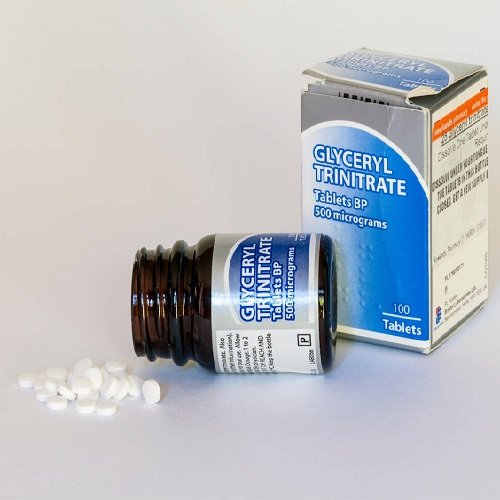
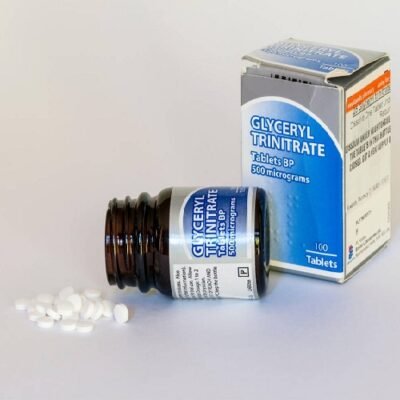
Glyceryl trinitrate
Price range: €120.00 through €820.00
Glyceryl trinitrate (GTN) is an important nitrate medicine used mainly for rapid relief and prevention of angina symptoms. By relaxing blood vessels and reducing the heart’s workload, it helps improve oxygen supply to the heart muscle. Because GTN can significantly lower blood pressure and interact with certain medicines, it should always be used exactly as prescribed.
Glyceryl Trinitrate (GTN): Uses, Dosage, Side Effects, Safety, and Frequently Asked Questions
What Is Glyceryl Trinitrate (GTN)?
Glyceryl trinitrate (GTN) is a prescription medicine used mainly to prevent and relieve angina (chest pain caused by reduced blood flow to the heart muscle). It belongs to a group of medicines called nitrates.
GTN works by relaxing and widening blood vessels, which reduces the workload on the heart and improves blood supply to the heart muscle.
It is available in several forms, including:
- Sublingual tablets placed under the tongue.
- Mouth sprays.
- Patches.
- Ointments.
- Intravenous preparations used in hospitals.
The form prescribed depends on the condition being treated.
How Glyceryl Trinitrate Works
During angina, the heart muscle may not receive enough oxygen-rich blood, especially during physical activity or stress.
GTN works by:
- Relaxing smooth muscles in blood vessel walls.
- Widening veins and arteries.
- Reducing the amount of blood returning to the heart.
- Lowering the heart’s workload.
- Improving oxygen supply to the heart muscle.
This helps relieve angina symptoms and may reduce the frequency of chest pain episodes.
Glyceryl Trinitrate Uses
Angina (Chest Pain)
GTN is most commonly used for:
- Rapid relief of angina attacks.
- Prevention of angina symptoms before activities known to trigger chest pain.
Symptoms of angina may include:
- Pressure or tightness in the chest.
- Pain spreading to the arm, neck, jaw, or back.
- Shortness of breath.
- Discomfort during exertion.
Heart Conditions in Hospital Settings
GTN may also be used in hospitals for certain heart-related conditions, including situations where doctors need to reduce strain on the heart or manage blood pressure.
Anal Fissures (GTN Ointment)
A low-dose GTN ointment may sometimes be prescribed to treat anal fissures by relaxing the muscles around the anus and improving blood flow to support healing.
Benefits of Glyceryl Trinitrate
When used correctly, GTN may help:
- Provide rapid relief from angina symptoms.
- Reduce pressure on the heart.
- Improve blood flow to heart tissue.
- Prevent predictable angina episodes.
- Improve exercise tolerance in some patients.
Glyceryl Trinitrate Dosage
The dose depends on:
- The reason for treatment.
- The formulation being used.
- The severity of symptoms.
- Individual response.
General guidance:
- Use exactly as prescribed.
- Sublingual tablets or sprays are usually used when angina symptoms occur or before activities that may trigger symptoms.
- Do not use more than the recommended amount.
For chest pain that does not improve as expected after using GTN, seek urgent medical advice.
How to Use GTN Tablets or Spray
Sublingual Tablets
General steps:
- Sit down if possible.
- Place the tablet under the tongue.
- Allow it to dissolve.
- Do not swallow the tablet immediately.
- Follow your healthcare provider’s instructions.
Mouth Spray
General steps:
- Use as directed.
- Spray under the tongue or inside the mouth according to the product instructions.
- Avoid inhaling the spray.
Always follow the instructions provided with your specific GTN product.
Missed Dose
GTN is often used when needed rather than on a regular schedule.
If using a scheduled GTN preparation:
- Follow the prescribed routine.
- Do not double doses if one is missed.
Common Side Effects
Common side effects may include:
- Headache.
- Dizziness.
- Flushing.
- Feeling light-headed.
- Low blood pressure.
- Nausea.
Headaches are common because GTN widens blood vessels and may improve as the body adjusts.
Serious Side Effects
Seek urgent medical attention if you experience:
- Fainting.
- Severe dizziness.
- Very low blood pressure.
- Worsening chest pain.
- Signs of an allergic reaction.
- New or unusual heart symptoms.
Chest pain that is severe, persistent, or different from usual angina symptoms may require emergency assessment.
Safety Information
Before using GTN, tell your healthcare provider if you have:
- Low blood pressure.
- Heart valve problems.
- Severe anaemia.
- Increased pressure inside the skull.
- Glaucoma.
- Recent heart problems.
- Severe dehydration.
GTN can cause dizziness or faintness, especially when standing up quickly.
Drug Interactions
GTN should not be combined with certain medicines, especially:
- Erectile dysfunction medicines such as sildenafil, tadalafil, or vardenafil.
- Certain medicines used for pulmonary hypertension.
Combining these medicines can cause a dangerous drop in blood pressure.
GTN may also interact with:
- Blood pressure medicines.
- Other nitrate medicines.
- Some heart medicines.
- Alcohol.
Always tell your healthcare provider about all medicines and supplements you take.
Alcohol and Glyceryl Trinitrate
Alcohol may increase the blood-pressure-lowering effects of GTN and increase the risk of:
- Dizziness.
- Fainting.
- Light-headedness.
Use caution and discuss alcohol intake with your healthcare provider.
Pregnancy and Breastfeeding
If you are pregnant, planning pregnancy, or breastfeeding, discuss GTN use with your healthcare provider.
Your healthcare provider will decide whether GTN is appropriate based on your condition.
Storage
Store GTN:
- According to the product instructions.
- Keep sublingual tablets in their original container.
- Protect from heat, moisture, and light.
- Keep out of reach of children.
Some GTN tablets may lose effectiveness if stored incorrectly.
Frequently Asked Questions (FAQs)
What is glyceryl trinitrate used for?
GTN is mainly used to relieve and prevent angina chest pain caused by reduced blood flow to the heart.
How quickly does GTN work?
Sublingual GTN tablets and sprays are designed to work quickly, often within minutes.
Can GTN stop a heart attack?
GTN can relieve angina symptoms, but it does not treat all causes of chest pain or replace emergency medical care during a heart attack.
How do I know if chest pain is serious?
Chest pain that is severe, new, unusual, lasts longer than expected, or does not improve with prescribed treatment requires urgent medical attention.
Can I use GTN with blood pressure medicine?
Sometimes, but your healthcare provider should review your medicines because GTN can lower blood pressure.
Why does GTN cause headaches?
GTN widens blood vessels, including those in the head, which can trigger headaches.
Can I take GTN with sildenafil or similar medicines?
No. Combining GTN with erectile dysfunction medicines can cause a dangerous drop in blood pressure.
Can GTN be used every day?
Some GTN forms are used regularly, while others are used only when needed. Follow your prescription instructions.
Does GTN expire?
Yes. GTN products can lose effectiveness after expiry or if stored incorrectly.
What happens if I use too much GTN?
Too much GTN may cause severe low blood pressure, dizziness, fainting, or other serious effects. Seek urgent medical help if excessive use occurs.
Final Thoughts
Glyceryl trinitrate (GTN) is an important nitrate medicine used mainly for rapid relief and prevention of angina symptoms. By relaxing blood vessels and reducing the heart’s workload, it helps improve oxygen supply to the heart muscle. Because GTN can significantly lower blood pressure and interact with certain medicines, it should always be used exactly as prescribed.
Medical Disclaimer: This article is for educational and informational purposes only and should not replace professional medical advice, diagnosis, or treatment. Always consult a qualified healthcare professional before starting, stopping, or changing any medication.
| Quantity | 30 Pills, 60 Pills, 120 Pills, 180 Pills, 200 Pills, 250 Pills, 300 Pills, 400 Pills, 500 Pills |
|---|
Be the first to review “Glyceryl trinitrate”
Related products
Drugs
Drugs
Drugs

Drugs
Drugs
Drugs
Drugs
Reviews
There are no reviews yet.