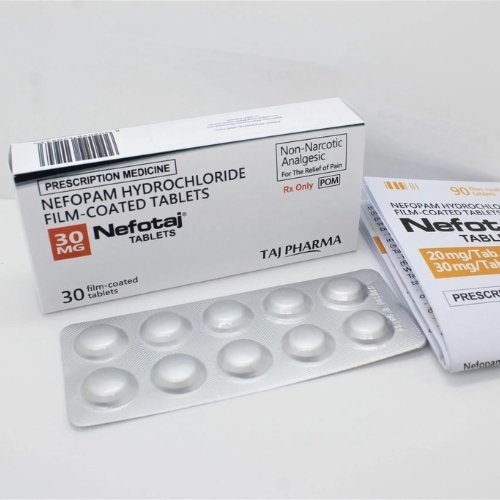
Nefopam 30mg
Price range: €120.00 through €820.00
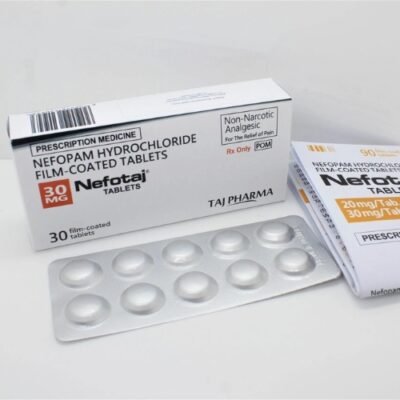
Nefopam 30 mg is a prescription non-opioid pain reliever used for the short-term management of moderate to severe pain. It provides pain relief through actions in the central nervous system and may help reduce the need for opioid medications in some patients.
Nefopam 30 mg: Uses, Dosage, Side Effects, Safety, and Frequently Asked Questions
What Is Nefopam 30 mg?
Nefopam 30 mg is a prescription non-opioid pain reliever (analgesic) used to treat moderate to severe acute pain. Unlike opioid pain medications, nefopam does not belong to the opioid class and is generally not classified as a nonsteroidal anti-inflammatory drug (NSAID).
It may be prescribed for short-term pain relief following surgery, injury, or other painful conditions when appropriate.
Nefopam is available in several formulations, including:
- Oral tablets (commonly 30 mg)
- Injectable formulations (in some countries)
How Nefopam Works
The exact way nefopam works is not fully understood, but it is believed to:
- Inhibit the reuptake of serotonin, norepinephrine, and dopamine in the central nervous system.
- Modify pain signals traveling between the nerves and the brain.
- Reduce the perception of pain without acting as an opioid.
Unlike NSAIDs, nefopam does not reduce inflammation.
Nefopam 30 mg Uses
Acute Pain Relief
Nefopam is used for the short-term treatment of moderate to severe pain caused by conditions such as:
- Postoperative pain.
- Musculoskeletal injuries.
- Trauma.
- Acute back pain.
- Other painful conditions as determined by a healthcare provider.
It may sometimes be used alongside other pain-relieving medicines as part of a multimodal pain management plan.
Benefits of Nefopam 30 mg
When prescribed appropriately, nefopam may help:
- Relieve moderate to severe pain.
- Reduce the need for opioid pain medicines in some situations.
- Improve comfort during recovery from injury or surgery.
- Provide pain relief without the stomach irritation commonly associated with NSAIDs.
Nefopam 30 mg Dosage
The correct dose depends on:
- The severity of pain.
- Age.
- Medical history.
- Liver and kidney function.
- Other medicines being taken.
General guidance:
- Take exactly as prescribed.
- Do not exceed the prescribed dose.
- Nefopam is usually intended for short-term use unless your healthcare provider advises otherwise.
How to Take Nefopam 30 mg
For best results:
- Swallow the tablet with water.
- It may be taken with or without food, although taking it with food may help reduce stomach upset.
- Take doses at evenly spaced intervals as directed.
- Avoid taking more tablets than prescribed.
Missed Dose
If you miss a dose:
- Take it as soon as you remember unless it is nearly time for your next dose.
- Skip the missed dose if necessary.
- Do not take two doses at the same time.
Common Side Effects
Common side effects may include:
- Nausea.
- Dry mouth.
- Dizziness.
- Sweating.
- Fast heartbeat.
- Drowsiness.
- Nervousness.
- Headache.
These side effects are often mild and may improve as your body adjusts to the medicine.
Serious Side Effects
Seek immediate medical attention if you experience:
- Severe allergic reactions.
- Difficulty breathing.
- Seizures.
- Confusion.
- Hallucinations.
- Severe chest pain.
- Persistent rapid heartbeat.
Although uncommon, nefopam may increase the risk of seizures, particularly in susceptible individuals.
Safety Information
Before taking nefopam, tell your healthcare provider if you have:
- Epilepsy or a history of seizures.
- Glaucoma.
- Difficulty urinating or an enlarged prostate.
- Heart disease.
- Liver disease.
- Kidney disease.
- Pregnancy or plans to become pregnant.
- Breastfeeding.
Nefopam is generally not recommended for people with uncontrolled epilepsy or a history of convulsive disorders.
Drug Interactions
Nefopam may interact with:
- Antidepressants.
- MAO inhibitors.
- Other medicines that affect serotonin levels.
- Sedatives.
- Opioid pain medicines.
- Alcohol.
Always tell your healthcare provider about all prescription medicines, over-the-counter products, vitamins, and herbal supplements you use.
Alcohol and Nefopam
Alcohol may increase:
- Drowsiness.
- Dizziness.
- Impaired concentration.
- Reduced coordination.
Avoid or limit alcohol while taking nefopam unless your healthcare provider advises otherwise.
Pregnancy and Breastfeeding
If you are pregnant, planning pregnancy, or breastfeeding:
- Discuss the potential benefits and risks with your healthcare provider before taking nefopam.
- It should only be used during pregnancy or breastfeeding if clearly recommended by a healthcare professional.
Storage
Store nefopam tablets:
- At room temperature.
- Away from moisture and direct heat.
- In the original packaging.
- Out of reach of children.
Frequently Asked Questions (FAQs)
What is Nefopam 30 mg used for?
Nefopam 30 mg is used for the short-term treatment of moderate to severe acute pain, including pain after surgery or injury.
Is nefopam an opioid?
No. Nefopam is a non-opioid pain reliever.
Is nefopam an NSAID?
No. Nefopam is not a nonsteroidal anti-inflammatory drug (NSAID) and does not reduce inflammation.
How long does nefopam take to work?
Many people begin to notice pain relief within about an hour after taking an oral dose, although this may vary.
Can nefopam make you sleepy?
Yes. Drowsiness and dizziness are possible side effects. Avoid driving or operating machinery until you know how the medicine affects you.
Can nefopam cause a fast heartbeat?
Yes. Increased heart rate (tachycardia) is a known side effect in some people.
Can I stop nefopam suddenly?
If you are taking nefopam for short-term pain relief, it can usually be stopped when no longer needed. Follow your healthcare provider’s advice.
Can older adults take nefopam?
Yes, but older adults may be more sensitive to side effects such as dizziness, confusion, and fast heartbeat. Dose adjustments may be required.
Can nefopam be taken with paracetamol?
In some cases, healthcare providers may prescribe nefopam alongside paracetamol as part of a pain management plan. Always follow medical advice.
What happens if I take too much nefopam?
An overdose may cause severe drowsiness, confusion, rapid heartbeat, hallucinations, seizures, or other serious symptoms. Seek emergency medical attention immediately if an overdose is suspected.
Final Thoughts
Nefopam 30 mg is a prescription non-opioid pain reliever used for the short-term management of moderate to severe pain. It provides pain relief through actions in the central nervous system and may help reduce the need for opioid medications in some patients.
For safe and effective use, take nefopam exactly as prescribed, avoid exceeding the recommended dose, and contact your healthcare provider if you experience significant side effects or your pain does not improve.
Medical Disclaimer: This article is for educational and informational purposes only and should not replace professional medical advice, diagnosis, or treatment. Always consult a qualified healthcare professional before starting, stopping, or changing any medication.
| Quantity | 30 Pills, 60 Pills, 120 Pills, 180 Pills, 200 Pills, 250 Pills, 300 Pills, 400 Pills, 500 Pills |
|---|
Be the first to review “Nefopam 30mg”
Related products
Drugs
Drugs

Drugs
Drugs
Drugs
Drugs
Drugs
Reviews
There are no reviews yet.