
Euro Pharmacies PAL-GHK 10 mg: Educational Guide to Palmitoyl-GHK, Skin Research, Benefits, and Safety
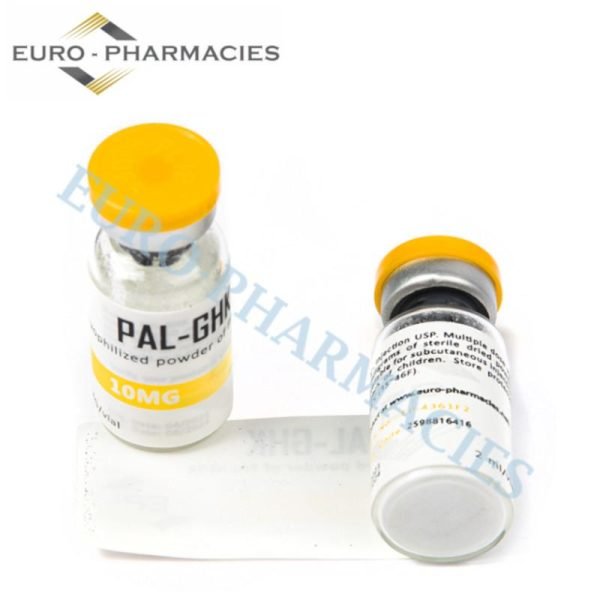
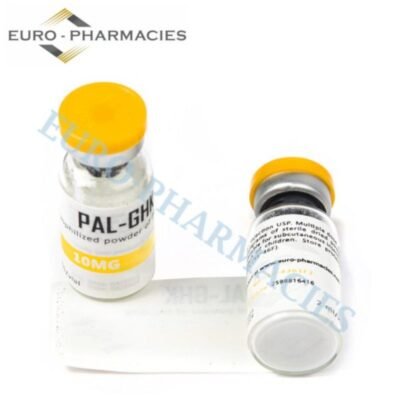
Euro Pharmacies PAL-GHK 10 mg is a product name associated with PAL-GHK, also known as Palmitoyl-Gly-His-Lys and Palmitoyl Tripeptide-1.
PAL-GHK is a lipid-modified peptide related to the naturally occurring GHK peptide. The addition of a palmitoyl group increases the molecule’s lipophilic properties and has contributed to interest in topical skincare formulations.
Research into Pal-GHK has focused primarily on cosmetic applications, skin biology, collagen-related activity, and laboratory research. Evidence for topical cosmetic use should not automatically be applied to an injectable or other non-topical product. The safety profile of a specific Euro Pharmacies PAL-GHK product cannot be confirmed from its product name or stated amount alone.
What Is Euro Pharmacies PAL-GHK?
Euro Pharmacies PAL-GHK is a product name associated with Palmitoyl-GHK.
The product description indicates:
- Product name: Euro Pharmacies PAL-GHK
- Associated compound: Palmitoyl-Gly-His-Lys
- Alternative name: Palmitoyl Tripeptide-1
- Stated amount: 10 mg
- Product category: Peptide-related research or cosmetic ingredient
The actual identity, purity, concentration, formulation, and manufacturing quality of any specific product should not be assumed solely from its label or packaging.
What Is GHK?
GHK is a naturally occurring tripeptide composed of three amino acids:
- Glycine
- Histidine
- Lysine
GHK has been studied in relation to tissue biology and skin processes.
Pal-GHK is a modified version in which a palmitoyl group is attached to the peptide. This lipid modification can alter the molecule’s physical properties and its interaction with topical formulations.
What Does Palmitoyl-GHK Mean?
The term Pal-GHK refers to a palmitoylated form of GHK.
Palmitoylation may influence:
- Lipid solubility
- Formulation compatibility
- Interaction with the skin surface
- Molecular stability
These properties are particularly relevant to topical cosmetic formulations.
However, a chemical modification that improves compatibility with a topical formulation does not automatically establish safety or effectiveness for injection or systemic use.
Research on Skin and Collagen
Pal-GHK has been studied in connection with skin biology and collagen-related activity.
Research has examined whether Pal-GHK may influence biological processes associated with:
- Collagen production
- Skin structure
- Skin thickness
- Elasticity
- Appearance of fine lines
A recent review of peptide safety in cosmetics notes research involving Pal-GHK and describes studies investigating collagen-related activity in laboratory and skin-tissue models.
These findings should be interpreted carefully because laboratory activity does not necessarily translate into clinically meaningful outcomes for every product or formulation.
Topical Cosmetic Evidence
Some research has evaluated Pal-GHK in topical formulations.
A study of semi-solid Pal-GHK formulations assessed skin tolerance in healthy volunteers and reported no adverse skin reactions in the tested formulations. The study was focused on topical application and should not be interpreted as evidence that an unspecified 10 mg product is safe for injection or systemic administration.
The Cosmetic Ingredient Review has also evaluated Pal-GHK-related cosmetic ingredients and reported safety in the present practices of cosmetic use and concentration. This assessment relates to cosmetic applications and does not establish safety for other routes of administration.
Cosmetic Versus Systemic Use
One of the most important distinctions when discussing PAL-GHK is the difference between topical cosmetic use and systemic exposure.
A peptide may have evidence supporting use in a cream or serum while lacking evidence for:
- Injection
- Oral administration
- Systemic exposure
- Long-term high-dose use
The route of administration can significantly change exposure, absorption, distribution, metabolism, and potential risks.
Therefore, evidence from topical skincare studies should not be used to claim that an injectable or research product has the same safety profile.
Potential Skin-Related Research Areas
PAL-GHK has been discussed in relation to several areas of skin research.
These include:
- Collagen-related processes
- Skin elasticity
- Skin thickness
- Appearance of fine lines
- Skin conditioning
- Tissue repair research
The strength of evidence varies between laboratory studies, formulation studies, and human cosmetic research.
Claims should be evaluated according to the specific formulation and route of administration studied.
Product Authenticity and Quality
A product labeled Euro Pharmacies PAL-GHK 10 mg may not necessarily contain genuine Pal-GHK or the stated amount.
Potential concerns with unregulated peptide products include:
- Incorrect peptide identity
- Incorrect amount
- Contamination
- Degradation
- Incorrect labeling
- Inadequate storage
- Inconsistent manufacturing quality
A label, vial, package, or certificate alone cannot independently confirm molecular identity, purity, potency, or sterility.
Why Peptide Characterization Matters
Peptides require appropriate analytical testing to confirm their identity and quality.
Important quality characteristics may include:
- Molecular identity
- Purity
- Amount of active peptide
- Degradation products
- Contaminants
- Sterility where relevant
A research or cosmetic product should not automatically be considered equivalent to a regulated pharmaceutical product.
Research-Only Products and Regulatory Concerns
Some PAL-GHK products are sold as research materials rather than approved medicines.
A supplier’s research-use-only designation means the product is not necessarily evaluated for therapeutic use in humans.
Health Canada has warned about unauthorized injectable peptide products, including products marketed as PAL-GHK, stating that unauthorized injectable drugs have not been assessed for safety, efficacy, and quality.
This highlights the importance of distinguishing between a cosmetic peptide ingredient, a laboratory research compound, and an approved medical product.
Possible Safety Considerations
The safety of PAL-GHK depends heavily on the formulation and route of administration.
For topical cosmetic formulations, available studies have reported good tolerance under the tested conditions. However, an individual may still experience:
- Skin irritation
- Redness
- Sensitivity
- Allergic reactions
For non-topical or injectable products, safety is much less certain when the exact product has not undergone appropriate pharmaceutical testing.
Immunological Considerations
Peptides can potentially interact with the immune system.
Possible concerns may include:
- Hypersensitivity
- Allergic reactions
- Immune responses to impurities
- Reactions to formulation ingredients
The risk may depend on the molecular structure, purity, formulation, and route of administration.
PAL-GHK and GHK-Cu Are Not the Same
PAL-GHK should not automatically be confused with GHK-Cu.
Although both are related to the GHK peptide family:
- PAL-GHK is a palmitoylated form of GHK.
- GHK-Cu is a copper complex involving GHK.
Their chemical properties, formulation characteristics, and biological behavior are different.
Research on one should not automatically be used to make claims about the other.
Legal and Regulatory Considerations
The regulatory status of PAL-GHK depends on the country and the intended use.
Regulations may differ for:
- Cosmetic ingredients
- Research chemicals
- Injectable products
- Pharmaceutical medicines
The availability of a product online does not automatically mean that it is approved for human use, legally authorized, authentic, sterile, or manufactured according to pharmaceutical standards.
Frequently Asked Questions
What is Euro Pharmacies PAL-GHK?
It is a product name associated with Palmitoyl-Gly-His-Lys, also known as Palmitoyl Tripeptide-1.
What is the stated amount?
The product description indicates 10 mg.
What is PAL-GHK used for in research?
Research has focused mainly on topical cosmetic applications and skin-related biology, including collagen-related processes.
Is PAL-GHK the same as GHK-Cu?
No. PAL-GHK and GHK-Cu are chemically different forms of GHK-related compounds.
Is PAL-GHK an approved injectable medicine?
A product marketed as PAL-GHK should not automatically be assumed to be an approved injectable medicine. Health Canada has specifically warned about unauthorized injectable peptide products marketed as PAL-GHK.
Is topical Pal-GHK the same as a 10 mg research product?
No. Evidence from a specific topical formulation cannot automatically be applied to a separate product with a different formulation, concentration, or route of administration.
Are online PAL-GHK products always genuine?
No. Products from unregulated sources may be mislabeled, degraded, contaminated, incorrectly quantified, or contain a different compound.
Final Educational Summary
Euro Pharmacies PAL-GHK 10 mg is a product name associated with Palmitoyl-Gly-His-Lys, also known as Palmitoyl Tripeptide-1.
PAL-GHK is a lipid-modified GHK-related peptide that has been studied primarily in cosmetic and laboratory contexts. Research has examined topical formulations and skin-related processes such as collagen-associated activity and skin tolerance.
The product description indicates a stated amount of 10 mg, but the actual identity, purity, potency, formulation, sterility, and manufacturing quality of any specific product should not be assumed solely from its packaging.
A key educational distinction is that evidence for topical cosmetic PAL-GHK does not automatically establish the safety or effectiveness of an injectable or systemic product. Health Canada has warned about unauthorized injectable peptide products marketed as PAL-GHK that have not been assessed for safety, efficacy, or quality.
PAL-GHK should also not be confused with GHK-Cu, which is a different GHK-related compound with different chemical properties.
Educational disclaimer: This article is provided for general educational and SEO purposes only. It does not confirm the composition of any specific product, endorse non-prescribed peptide use, or provide individualized dosing, reconstitution, injection, or treatment instructions.
Be the first to review “Euro Pharmacies PAL-GHK 10mg”
Related products
Injectable Steroids
Injectable Steroids
Injectable Steroids
Injectable Steroids
Injectable Steroids
Injectable Steroids
Injectable Steroids
Injectable Steroids
Reviews
There are no reviews yet.