
Euro Pharmacies PEG-MGF 2 mg: Educational Guide to PEGylated Mechano Growth Factor, Research, Risks, and Safety
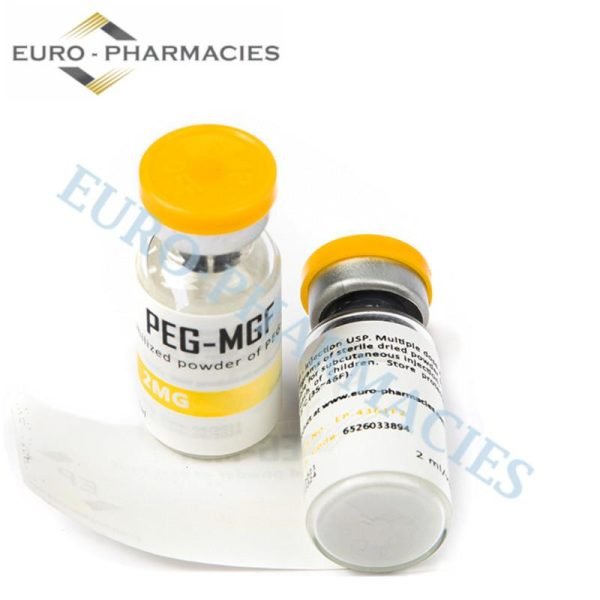
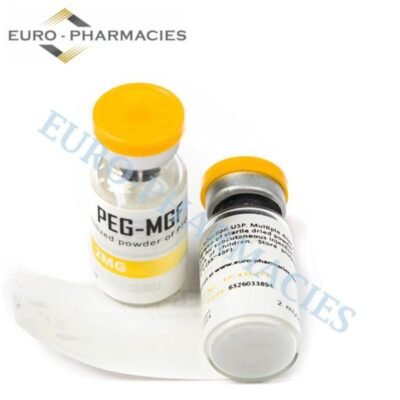
Euro Pharmacies PEG-MGF 2 mg is a product name associated with PEGylated Mechano Growth Factor, commonly abbreviated as PEG-MGF.
PEG-MGF is marketed as a modified form of Mechano Growth Factor (MGF), which is discussed in relation to the IGF-1 splice-variant system. The addition of polyethylene glycol, known as PEGylation, is intended to alter the molecule’s stability and exposure compared with non-PEGylated peptide forms.
However, an important distinction must be made: much of the scientific discussion surrounding MGF involves native MGF, IGF-1 splice-variant biology, or experimental peptide constructs—not necessarily the exact PEG-MGF product sold under a commercial label. The pharmacology and safety of a PEGylated construct cannot automatically be inferred from research on native MGF or other IGF-related molecules.
The product description indicates a labeled amount of 2 mg. However, the actual identity, purity, PEGylation characteristics, molecular structure, potency, sterility, and manufacturing quality of any specific product should not be assumed solely from its label or packaging.
What Is Euro Pharmacies PEG-MGF?
Euro Pharmacies PEG-MGF is a product name associated with PEGylated Mechano Growth Factor.
The product description indicates:
- Product name: Euro Pharmacies PEG-MGF
- Associated compound: PEGylated Mechano Growth Factor
- Common abbreviation: PEG-MGF
- Stated amount: 2 mg
- Product category: Research peptide/growth-factor-related compound
PEG-MGF is not the same as conventional human growth hormone, and it should not automatically be considered interchangeable with pharmaceutical IGF-1 products.
What Is Mechano Growth Factor?
Mechano Growth Factor, or MGF, is discussed as an IGF-1 splice variant associated with tissue-specific growth-factor biology.
Research into MGF has examined pathways related to:
- Muscle-cell biology
- Tissue repair
- Cell proliferation
- Cellular differentiation
- Growth-factor signaling
Much of this research is preclinical or mechanistic.
A major limitation is that evidence involving naturally occurring MGF biology or non-PEGylated MGF does not automatically establish the safety or effectiveness of a synthetic PEGylated version.
What Does PEGylation Mean?
PEGylation refers to attaching a polyethylene glycol polymer to a biological molecule.
This modification can alter characteristics such as:
- Molecular size
- Stability
- Enzymatic degradation
- Distribution within the body
- Clearance
The intended result may be prolonged exposure compared with a non-PEGylated form.
However, PEGylation also changes the biological behavior of the original molecule. Therefore, data from native MGF cannot automatically be applied to PEG-MGF.
The exact PEG chain length, attachment site, and molecular structure can be important when evaluating a PEGylated compound. Products marketed under the same general name may not necessarily have identical molecular characteristics.
PEG-MGF and the IGF-1 Pathway
MGF is discussed within the broader biology of the insulin-like growth factor system.
The IGF-related signaling network can influence:
- Cell growth
- Cell survival
- Tissue repair
- Muscle-cell activity
- Metabolic signaling
Because growth-factor pathways affect cellular processes, altering them may have effects beyond the tissues originally targeted by promotional claims.
The effects of PEG-MGF specifically remain insufficiently characterized in humans.
What Does Research Actually Show?
The evidence base for PEG-MGF itself is limited.
Recent scientific reviews emphasize that the mechanistic literature often cited in support of MGF-related claims is based on IGF-1 splice variants, native MGF biology, or experimental peptide constructs rather than a clinically characterized PEG-MGF medicine.
This means that claims about muscle recovery, tissue regeneration, or performance enhancement should be treated cautiously.
Preclinical findings may help generate scientific hypotheses, but they do not establish that a product is safe or effective for human use.
Human Safety Data
One of the most important limitations of PEG-MGF is the lack of robust human clinical safety data.
There is no established clinical safety profile comparable to that of approved medicines.
Important unanswered questions include:
- Appropriate medical indications
- Human pharmacokinetics
- Long-term safety
- Immunogenicity
- Effects of repeated exposure
- Effects on glucose metabolism
- Effects on growth-factor signaling
- Potential interactions with other hormone-active compounds
The absence of human safety data means that the true risk profile remains uncertain.
Potential Growth-Factor-Related Concerns
Growth-factor signaling can influence cellular growth and survival.
Theoretical concerns associated with manipulating growth-factor pathways may include:
- Abnormal tissue growth
- Unpredictable cellular responses
- Altered signaling feedback
- Potential effects on existing abnormal cells
These concerns do not establish that PEG-MGF causes cancer or other specific diseases. Rather, they highlight why compounds affecting growth-factor pathways require appropriate scientific and medical evaluation.
Individuals with active cancer or other serious growth-related medical conditions should seek professional medical advice before exposure to experimental growth-factor compounds.
Possible Metabolic Concerns
The IGF-1 and growth-factor systems interact with broader metabolic pathways.
Potential concerns may include:
- Changes in glucose regulation
- Altered insulin sensitivity
- Hypoglycemia-like symptoms
- Unexpected metabolic effects
The exact risks associated with PEG-MGF are difficult to quantify because the specific compound has not been adequately studied in controlled human clinical trials.
Potential Immunogenicity
PEGylation can alter how the immune system recognizes a molecule.
Repeated exposure to PEG-containing biological products may raise questions about:
- Anti-PEG antibodies
- Altered immune responses
- Hypersensitivity reactions
The clinical significance depends on the specific molecular structure and individual response.
Because PEG-MGF products are not standardized as approved medicines, the immunological risk of a particular product may be difficult to predict.
Product Authenticity and Quality
A product labeled Euro Pharmacies PEG-MGF 2 mg may not necessarily contain the stated compound or amount.
Potential concerns with unregulated peptide products include:
- Incorrect peptide identity
- Incorrect quantity
- Incomplete PEGylation
- Degraded peptide
- Contamination
- Poor sterility
- Incorrect labeling
A product’s packaging or appearance cannot independently confirm molecular identity, purity, sterility, or potency.
Why Analytical Testing Matters
For an experimental PEGylated peptide, product characterization is especially important.
Meaningful quality assessment may require analytical methods capable of confirming:
- Peptide identity
- Molecular mass
- Purity
- PEG conjugation
- Presence of degradation products
A basic certificate of analysis may not be sufficient unless the testing method is appropriate for the specific PEGylated molecule.
Research-Only Status
PEG-MGF is generally discussed as a research compound rather than an approved medicine.
Available sources describe PEG-MGF as lacking established pharmaceutical approval for a human therapeutic indication and emphasize the limited evidence base for the defined PEGylated compound.
This means that products sold online should not automatically be assumed to have undergone the same quality, safety, and efficacy evaluation required for approved medicines.
Anti-Doping Considerations
Growth-factor-related compounds may be relevant to sports anti-doping regulations.
Athletes should check the current rules of their relevant anti-doping organization before exposure to experimental growth-factor or IGF-related substances.
Products from unregulated sources may also contain undeclared prohibited compounds.
Legal and Regulatory Considerations
The regulatory status of PEG-MGF varies according to jurisdiction, but it is not generally established as an approved medicine for routine human treatment.
Regulations may apply to:
- Manufacture
- Sale
- Importation
- Distribution
- Human use
The availability of a product online does not automatically establish that it is approved, legal, authentic, sterile, or safe for human use.
Frequently Asked Questions
What is Euro Pharmacies PEG-MGF?
It is a product name associated with PEGylated Mechano Growth Factor, a modified form of an MGF-related peptide.
What does PEG-MGF mean?
PEG-MGF refers to a PEGylated form of Mechano Growth Factor.
What is the stated amount?
The product description indicates 2 mg.
Is PEG-MGF the same as HGH?
No. PEG-MGF and human growth hormone are different biological substances.
Is PEG-MGF the same as IGF-1?
No. Although MGF is discussed within the broader IGF-1 splice-variant system, PEG-MGF should not automatically be considered identical to pharmaceutical IGF-1.
Is PEG-MGF approved as a medicine?
PEG-MGF does not have an established approved therapeutic indication comparable to conventional approved medicines. The evidence base for the specific PEGylated compound remains very limited.
Are online PEG-MGF products always genuine?
No. Products from unregulated sources may be mislabeled, degraded, contaminated, incorrectly characterized, or contain a different compound.
Final Educational Summary
Euro Pharmacies PEG-MGF 2 mg is a product name associated with PEGylated Mechano Growth Factor, a modified MGF-related peptide.
PEGylation is intended to alter the stability and biological exposure of a peptide, but the modification also changes the molecule’s pharmacological properties. Research involving native MGF, IGF-1 splice variants, or other experimental constructs cannot automatically be used to establish the safety or effectiveness of a specific PEG-MGF product.
The product description indicates a labeled amount of 2 mg, but the actual molecular identity, purity, PEGylation characteristics, potency, sterility, and quality of any specific product should not be assumed from its packaging.
The major educational takeaway is that PEG-MGF remains poorly characterized as a human-use compound. Important uncertainties include long-term safety, human pharmacokinetics, immunogenicity, metabolic effects, growth-factor signaling, and product quality.
Because of the limited human evidence and lack of established therapeutic approval, PEG-MGF should not be treated as an ordinary nutritional supplement or as a proven medical treatment.
Educational disclaimer: This article is provided for general educational and SEO purposes only. It does not confirm the composition of any specific product, endorse non-prescribed use of PEG-MGF, or provide individualized dosing, injection, cycling, stacking, or performance-enhancement instructions.
Be the first to review “Euro Pharmacies PEG-MGF 2mg”
Related products

Injectable Steroids
Injectable Steroids
Injectable Steroids
Injectable Steroids
Injectable Steroids
Injectable Steroids

Injectable Steroids
Injectable Steroids
Reviews
There are no reviews yet.