
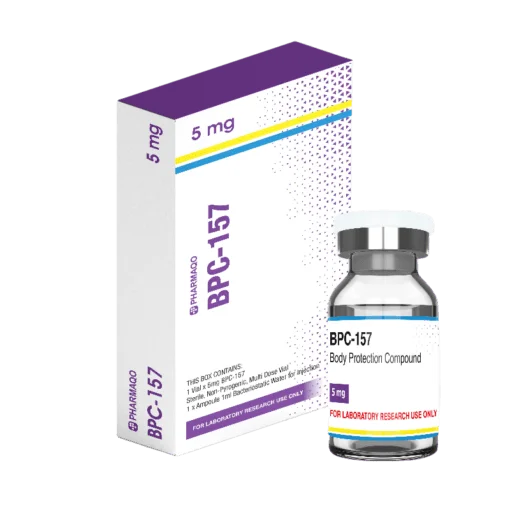
Pharmaqo UK – BPC-157: Educational Guide to BPC-157 Research, Potential Uses, Safety, and Regulatory Status
Pharmaqo UK – BPC-157 is a product name associated with BPC-157, an experimental peptide that has attracted interest in scientific and sports communities because of laboratory research involving tissue repair, inflammation, and gastrointestinal biology.
BPC-157 is commonly described as a synthetic peptide derived from a sequence associated with a protein found in gastric juice. Research has explored possible biological effects involving the gastrointestinal tract, blood vessels, connective tissues, and inflammatory pathways.
However, BPC-157 remains an experimental compound and is not an established, broadly approved human medicine for general treatment of injuries or disease. Much of the available research has been conducted in laboratory or animal models rather than large, high-quality clinical trials in humans.
The exact identity, purity, concentration, sterility, and manufacturing quality of any specific product labeled Pharmaqo UK – BPC-157 should not be assumed from the product name or packaging alone.
What Is Pharmaqo UK BPC-157?
Pharmaqo UK BPC-157 is marketed as a product associated with the experimental peptide BPC-157.
BPC-157 has attracted interest because laboratory research has investigated possible relationships with:
- Tissue repair
- Inflammatory pathways
- Gastrointestinal function
- Blood-vessel formation
- Connective-tissue biology
These areas of research have led to considerable online discussion.
However, experimental research findings should not be interpreted as proof that BPC-157 is a safe or effective treatment for a specific medical condition.
What Is BPC-157?
BPC-157 is a synthetic peptide consisting of a short chain of amino acids.
It has been studied in preclinical research involving different biological systems.
Researchers have explored possible effects involving:
- The digestive system
- Tendons
- Ligaments
- Muscles
- Nerves
- Blood vessels
- Inflammatory responses
The mechanisms proposed in research remain an area of scientific investigation.
Why Has BPC-157 Attracted Attention?
BPC-157 has become popular in online discussions because of preclinical studies involving tissue healing and gastrointestinal models.
Some research has examined the peptide in relation to:
- Injured tissue
- Inflammation
- Blood flow
- Cellular signaling
These findings have generated interest among researchers and individuals looking for experimental approaches to recovery.
However, positive results in laboratory animals do not automatically demonstrate that the same benefits occur in humans.
BPC-157 and Tissue Research
Preclinical research has investigated BPC-157 in relation to different types of tissue.
These studies have included areas such as:
- Tendon tissue
- Ligaments
- Muscle
- Bone
- Gastrointestinal tissue
The proposed biological mechanisms may involve interactions between cellular signaling, blood-vessel development, and inflammatory responses.
Nevertheless, more high-quality human research is needed before conclusions can be made about clinical effectiveness.
BPC-157 and Inflammation
Inflammation is a complex biological process that helps the body respond to injury and infection.
Research has explored whether BPC-157 may influence certain inflammatory pathways.
However, inflammation is not always harmful.
It can be an important part of the body’s normal immune response.
Attempting to alter inflammatory processes without appropriate medical guidance could potentially have unintended consequences.
Gastrointestinal Research
BPC-157 is often discussed in relation to gastrointestinal health.
This interest is partly connected to the compound’s origins in research involving gastric peptides.
Preclinical research has investigated possible effects involving:
- Gastric tissue
- Intestinal tissue
- Mucosal integrity
However, experimental findings should not be interpreted as proof that BPC-157 can treat conditions such as ulcers, inflammatory bowel disease, reflux, or other gastrointestinal disorders.
People with persistent digestive symptoms should seek appropriate medical evaluation.
Human Evidence Remains Limited
One of the most important facts about BPC-157 is that evidence from well-controlled human clinical research remains limited.
Animal and laboratory research can help scientists investigate:
- Biological mechanisms
- Potential therapeutic pathways
- Safety questions
- Areas for future research
However, laboratory results cannot establish:
- A safe human dose
- Long-term safety
- Clinical effectiveness
- Appropriate treatment duration
These questions require properly designed human clinical trials.
Potential Safety Concerns
Because BPC-157 remains experimental, its complete safety profile is not established.
Potential concerns may include:
- Unknown long-term effects
- Uncertain immune responses
- Unknown interactions with medications
- Product contamination
- Uncertain biological activity
A lack of documented side effects in limited research does not prove that a compound is risk-free.
Product Quality and Purity
A product labeled Pharmaqo UK – BPC-157 may not necessarily contain genuine BPC-157.
Potential concerns include:
- Incorrect peptide identity
- Incorrect concentration
- Degradation
- Contamination
- Counterfeit products
- Poor storage conditions
Peptides may be sensitive to handling and storage conditions.
Product appearance alone cannot establish purity or biological activity.
Injectable Product Concerns
Some BPC-157 products are marketed in forms intended for injection.
Injectable products create additional safety considerations.
Potential risks include:
- Bacterial contamination
- Injection-site infection
- Abscess formation
- Tissue injury
- Systemic infection
A product labeled as a peptide does not automatically mean that it was produced under pharmaceutical sterile manufacturing conditions.
Regulatory Status
BPC-157 is not a broadly approved prescription medicine for general human use.
Its regulatory status can vary depending on the country and intended use.
The availability of BPC-157 online does not establish that it has been approved as a treatment for injury, inflammation, gastrointestinal disease, or any other medical condition.
Consumers should follow the laws and regulations applicable in their jurisdiction.
Anti-Doping Considerations
Athletes should carefully review current anti-doping regulations before using experimental peptides or research compounds.
The regulatory status of a substance can change, and substances not approved as medicines may still create eligibility concerns.
Competitive athletes should consult the rules of their sport and relevant anti-doping organizations.
BPC-157 and Injury Recovery Claims
BPC-157 is often marketed online in connection with recovery from:
- Tendon injuries
- Ligament injuries
- Muscle damage
- Joint problems
However, online claims may go beyond the available clinical evidence.
An injury should be properly diagnosed because different conditions require different treatment approaches.
Self-treating a serious injury with an experimental compound may delay appropriate medical care.
Frequently Asked Questions
What is Pharmaqo UK BPC-157?
It is a product name associated with BPC-157, an experimental synthetic peptide studied primarily in preclinical research.
Is BPC-157 an approved medicine?
BPC-157 is not broadly approved as a general human treatment for injuries or diseases.
Is BPC-157 a steroid?
No. BPC-157 is a peptide and is chemically different from anabolic-androgenic steroids.
Has BPC-157 been studied for tissue repair?
Yes. Preclinical research has explored possible effects involving different tissues, including connective and gastrointestinal tissues.
Is BPC-157 proven to heal injuries in humans?
No. Limited human evidence means that strong conclusions about clinical effectiveness cannot currently be made.
Can peptide products be contaminated?
Yes. Products obtained from unregulated sources may be contaminated, mislabeled, degraded, or contain a different substance.
Is BPC-157 suitable for self-treatment?
Because it is an experimental compound with an incompletely established safety profile, individuals should not assume that self-treatment is safe.
Final Educational Summary
Pharmaqo UK – BPC-157 is a product name associated with BPC-157, an experimental synthetic peptide that has attracted interest because of preclinical research involving tissue repair, inflammation, gastrointestinal biology, blood vessels, and connective tissues.
Although laboratory and animal research has generated interest, BPC-157 remains an experimental compound, and the available human evidence is not sufficient to establish it as a broadly approved treatment for injuries or medical conditions.
Important concerns include unknown long-term safety, uncertain product quality, contamination, incorrect labeling, and the risks associated with unregulated injectable products.
The exact identity, purity, concentration, sterility, and manufacturing quality of any particular BPC-157 product should not be assumed from its packaging or marketing claims.
Anyone considering an experimental peptide or concerned about an injury or medical condition should consult a qualified healthcare professional.
Educational disclaimer: This article is provided for general educational and SEO purposes only. It does not endorse unapproved medical use of BPC-157, does not confirm the composition of any specific product, and does not provide dosing, injection, recovery, or treatment protocols.
Be the first to review “Pharmaqo Uk – BPC-157”
Related products
Injectable Steroids
Injectable Steroids
Injectable Steroids
Injectable Steroids
Injectable Steroids
Injectable Steroids
Injectable Steroids

Injectable Steroids
Reviews
There are no reviews yet.